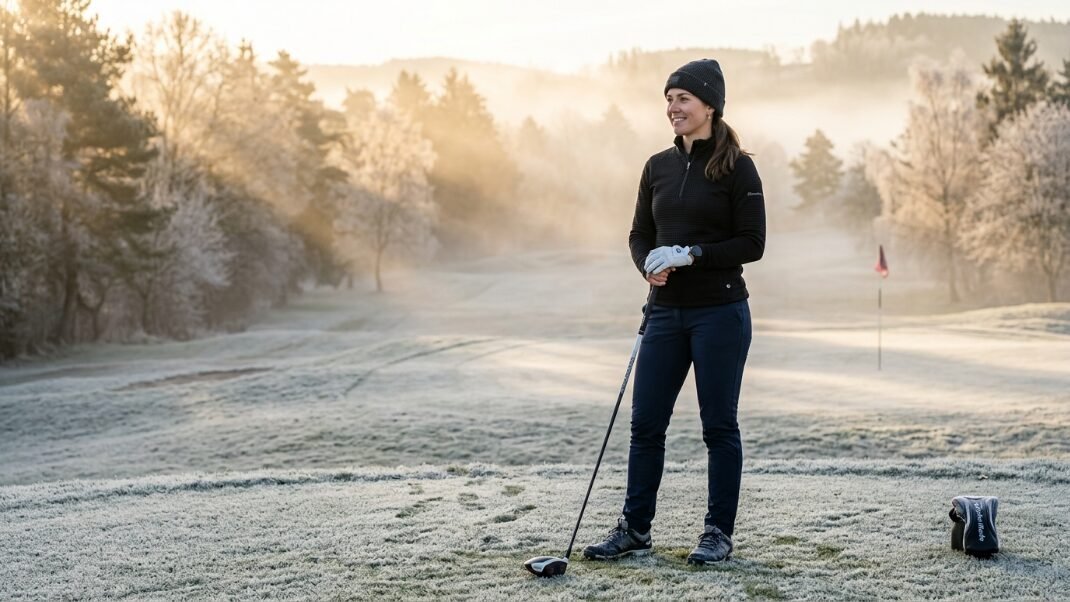
Winter golf separates the casual players from the true addicts. I remember a round last January at a local links course. The wind was whipping off the water. My fingers felt like frozen sausages by the fourth hole. I couldn’t feel the clubhead. My touch around the greens vanished. That day taught me a hard lesson. If your hands are cold, your game is dead. Since then, I’ve tested every gadget and glove on the market.

Keeping your hands warm is about blood flow and insulation. It is not just about wearing thick mittens. You need a strategy that allows you to feel the grip while fighting the frost. Most golfers fail because they wait until their hands are cold to act. You must start the warming process before you even reach the first tee.
This guide covers everything from tech-heavy heaters to simple physiological tricks. These methods help me maintain a 4-handicap even when the ground is crunchy. You will find that these tips make winter golf actually enjoyable.
1. Wear Specialized Winter Golf Gloves
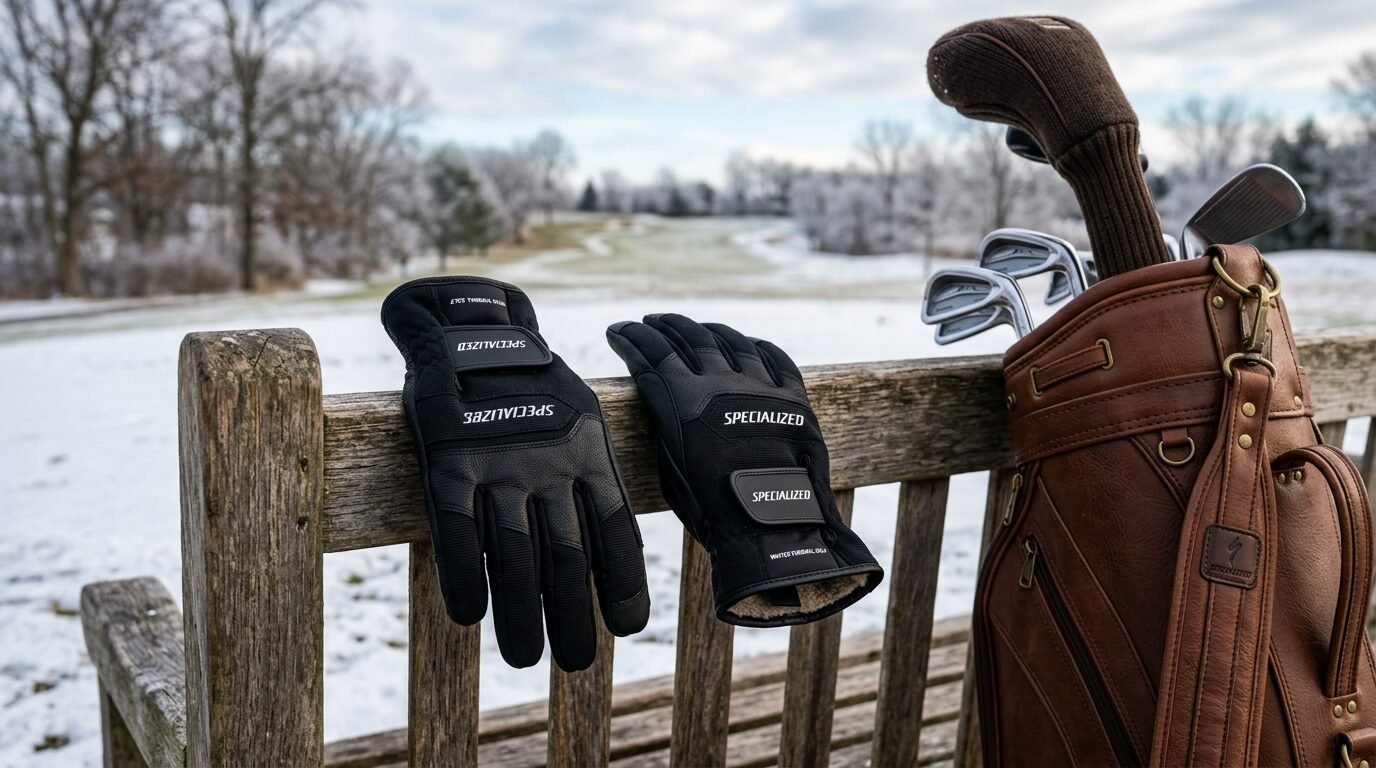
Standard leather gloves are useless in the cold. They are thin and designed for grip, not warmth. I switched to FootJoy WinterSof gloves years ago. They come in pairs, unlike regular gloves. They use a soft fleece backing to trap heat. The palm is still made of a material that grips well in damp conditions.
In my experience, these gloves work best when you put them on at home. Don’t wait until you are standing in the cold parking lot. Your hands should be warm when they go into the gloves. I’ve noticed that wearing two gloves feels strange at first. You lose a bit of “feel” on putts. However, the trade-off is worth it. You can actually swing the club because your muscles aren’t shivering.
I recommend buying a size slightly larger than your summer glove. This creates a small pocket of air. Air is a great insulator. If the glove is too tight, it can actually restrict blood flow. Restricted blood flow leads to colder fingers.
2. Invest in High-Quality Cart Mitts
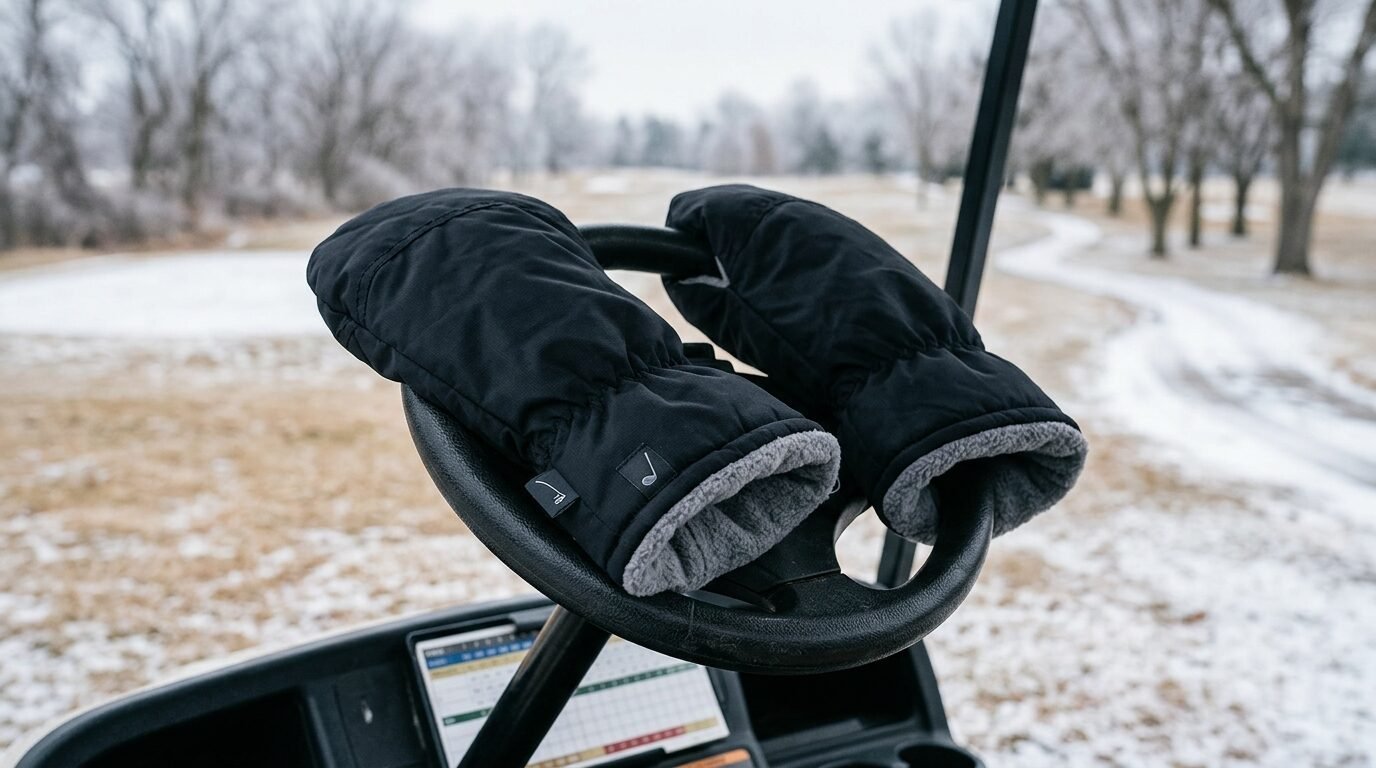
Cart mitts are the “ovens” of the golf world. These are oversized mittens designed to fit over your regular golf gloves. I use the Titleist Cart Mitts. They are windproof and lined with thick fleece. You wear them between shots. As soon as you hit your ball, you slide your hands back into the mitts.
I’ve seen this work wonders for players who ride in carts. The wind chill while driving is the fastest way to lose hand heat. These mitts stay in your lap or on the cart handle. They are easy to slip on and off. You don’t have to fumble with Velcro or zippers.
Inside the mitts, I always keep a heat source. This creates a micro-climate for your hands. Even if the air is 35 degrees, the inside of those mitts stays around 80. It’s a game-changer for long waits on the tee box.
3. Use Rechargeable Electric Hand Warmers
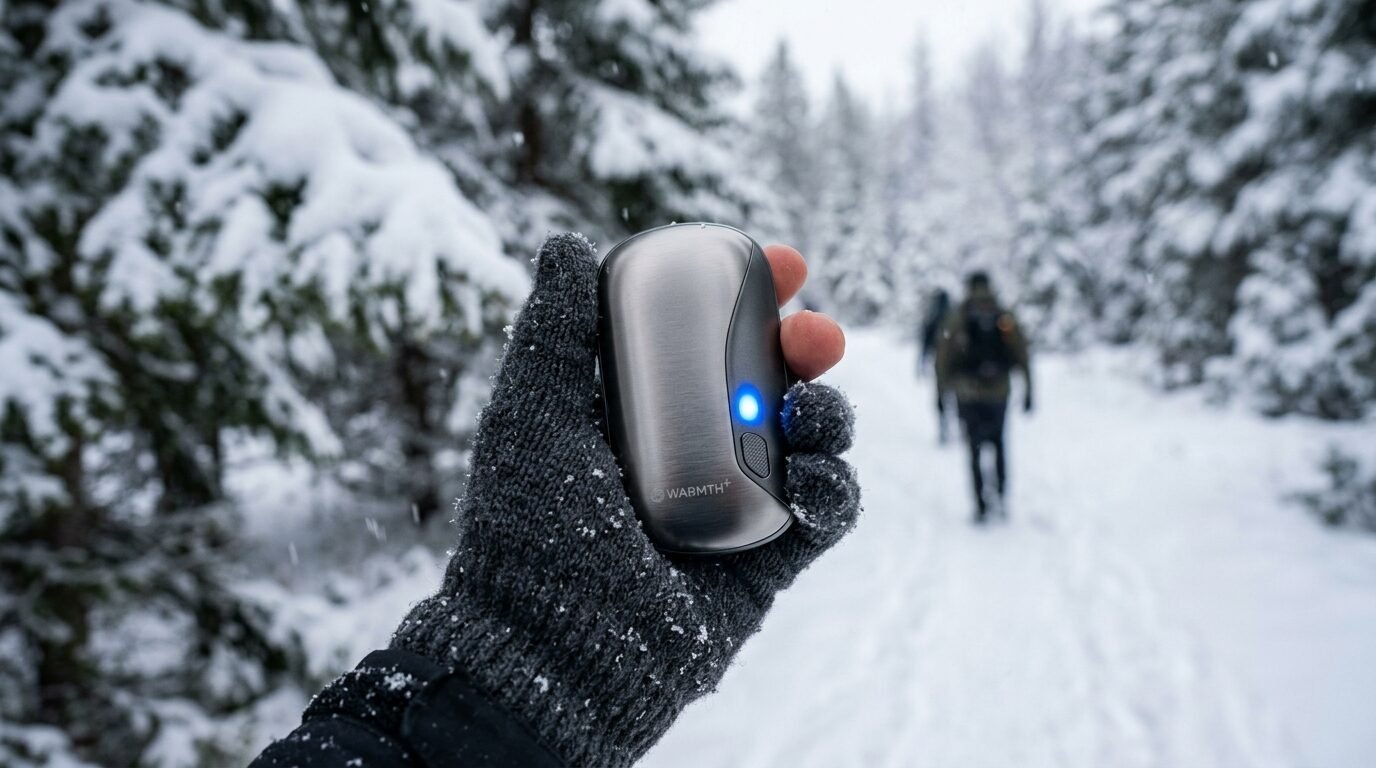
Chemical packs are okay, but electric warmers are better. I recently started using the Ocoopa Rechargeable Hand Warmer. It has three heat settings. On the highest setting, it gets surprisingly hot. I keep it in my jacket pocket or inside a cart mitt.
The benefit of electric warmers is consistency. Chemical packs can be duds. They sometimes take twenty minutes to get warm. An electric warmer is hot in seconds. I’ve tried the Zippo fuel-based warmers too. They stay hot for hours but they smell like lighter fluid. For most golfers, the USB-rechargeable ones are much cleaner.
I usually carry two. One for each pocket. If I’m walking, I keep my hands on them between every shot. It keeps the blood in my palms warm. That warm blood then travels to the fingertips. It is a simple loop of heat that keeps you functional.
4. Master the HotHands Chemical Strategy
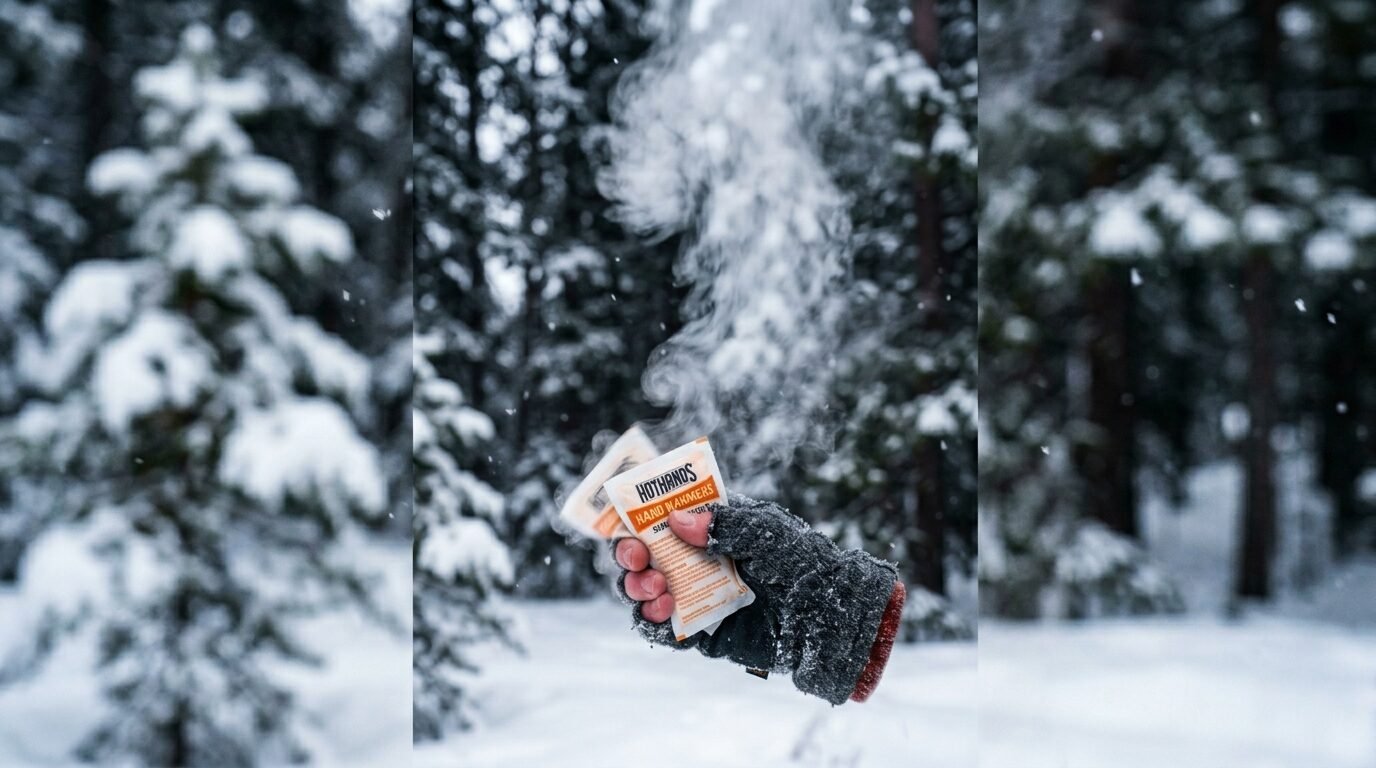
If you prefer disposable packs, you need a strategy. Don’t just throw them in your pocket and hope for the best. I’ve noticed they work much better if they have a little bit of oxygen. Shake them vigorously for a full minute before you start your round.
I place one pack on the back of my wrist. I use a sweatband or a base layer to hold it in place. There are major arteries close to the skin on your wrists. Warming the blood as it passes through the wrist helps keep the fingers warm. I’ve tried this in sub-freezing temperatures. It works better than just holding the pack in your palm.
Another trick is putting them inside your cart mitts. This turns the mitts into heated chambers. Just be sure to buy the “Super” or “Long Lasting” versions. The small ones often die by the 12th hole.
5. Walk the Course Instead of Riding
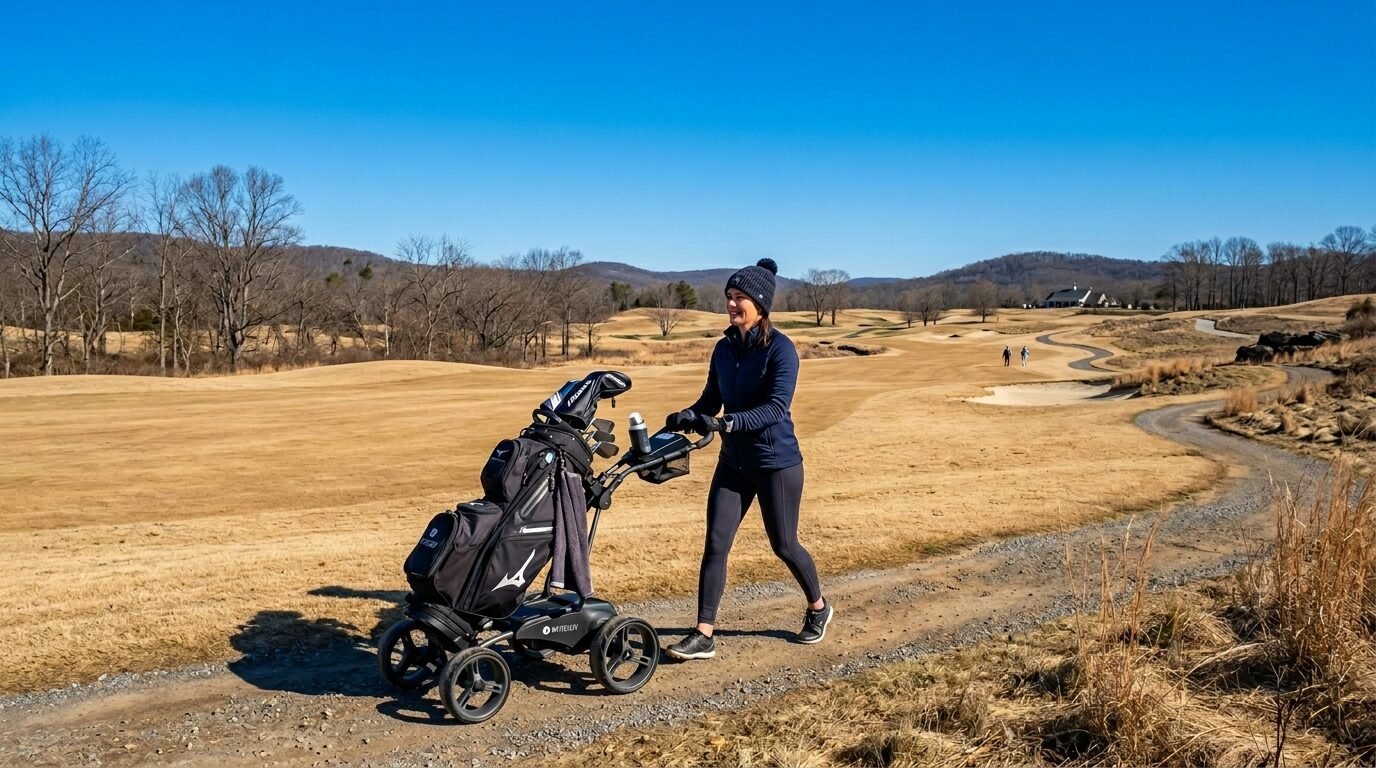
This is the most effective way to stay warm. Walking keeps your heart rate up. A higher heart rate means better circulation. When you sit in a cart, your body enters a resting state. Your extremities are the first things to get cold.
I’ve seen a 10-degree perceived difference between walking and riding. When you walk, your large leg muscles generate heat. This heat spreads to your core. A warm core keeps the blood flowing to your hands. If your core gets cold, your body pulls blood away from your fingers to protect your organs.
I use a pushcart in the winter. It keeps me moving but saves my back. Pushing the cart also keeps your hands active. You are constantly gripping the handle, which prevents them from becoming stiff.
6. Focus on Core Temperature

Your hands get cold because your core is cold. It is a biological survival mechanism. If you want warm hands, wear a high-quality vest. I swear by the Galvin Green Interface-1 vests. They block the wind and trap core heat without being bulky.
If your torso is toasted, your brain tells your body it is safe to send blood to the hands. I often see golfers wearing three pairs of gloves but only a thin polo shirt. They wonder why their fingers are blue.
I’ve tried wearing a heated vest as well. The Arris Heated Vest uses a battery pack to warm the back and chest. When I wear that, I barely need heavy gloves. My body feels so warm that my hands stay naturally pink and limber.
7. Keep Your Grips Dry and Clean
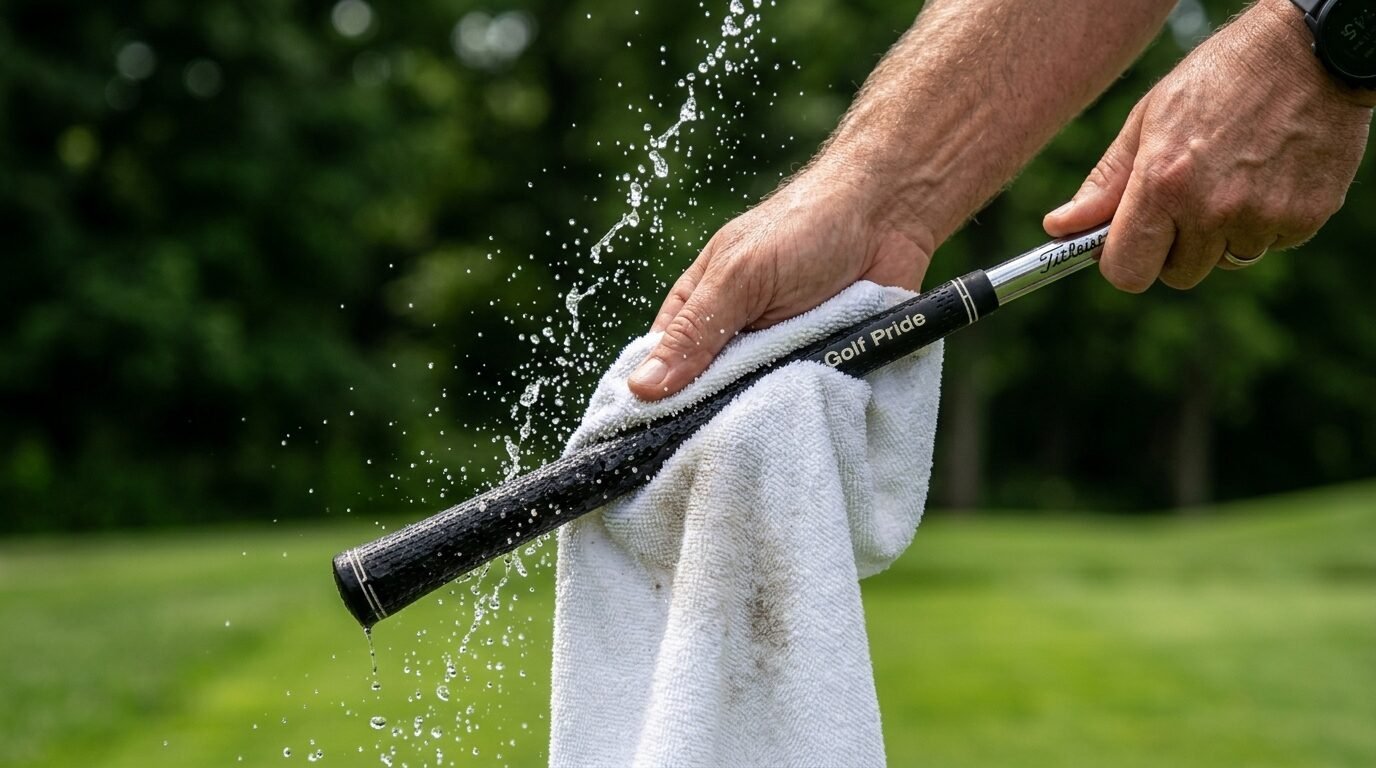
Wet hands are cold hands. Evaporation causes a massive drop in temperature. If your grips are damp from the grass or light rain, your gloves will get wet. Once that moisture hits the wind, your hands will freeze.
I carry a dedicated dry towel inside my bag. I don’t leave it hanging on the outside where it can get damp. I wipe the grip of every club before I play the shot. I’ve seen players struggle because they let their grips get “ice cold” from moisture.
I also use iron covers in the winter. I know they aren’t fashionable. However, cold metal transfers temperature quickly. If your clubheads are freezing, that cold travels up the shaft to your hands. Keeping them covered helps maintain a more neutral temperature.
8. Use Wrist Warmers or Pulse Point Bands
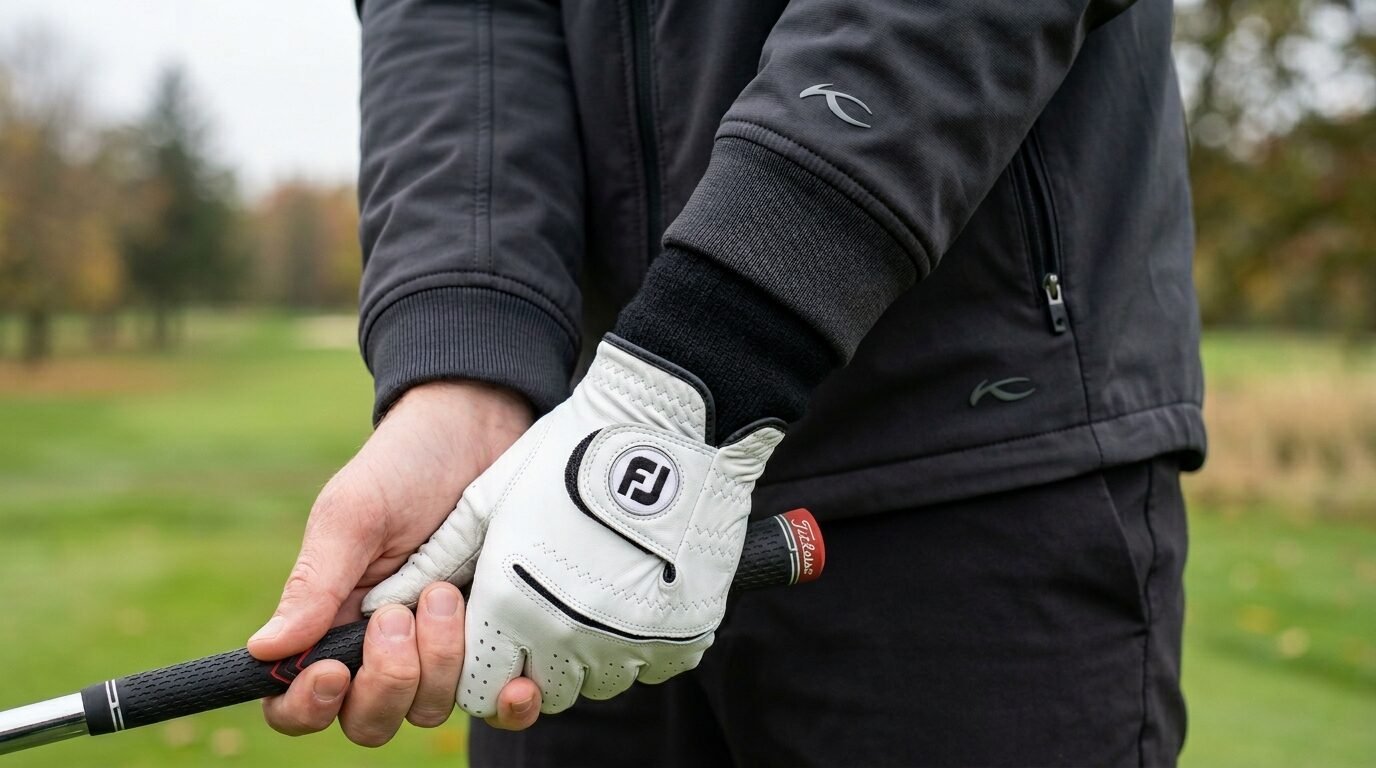
The wrists are often overlooked. As mentioned earlier, the blood vessels are very close to the surface here. I use specialized wrist gaiters made of merino wool. They fill the gap between your glove and your jacket sleeve.
In my experience, this “gap” is where most heat escapes. Cold air hits the wrist and cools the blood going to your fingers. By sealing this area, you maintain a much higher hand temperature.
I once forgot my wrist warmers and used a pair of cut-off socks. It looked ridiculous but worked perfectly. It kept my “pulse points” protected. I’ve seen this tip work for many of my playing partners who struggle with Raynaud’s or poor circulation.
9. Avoid Cold Drinks and Caffeine
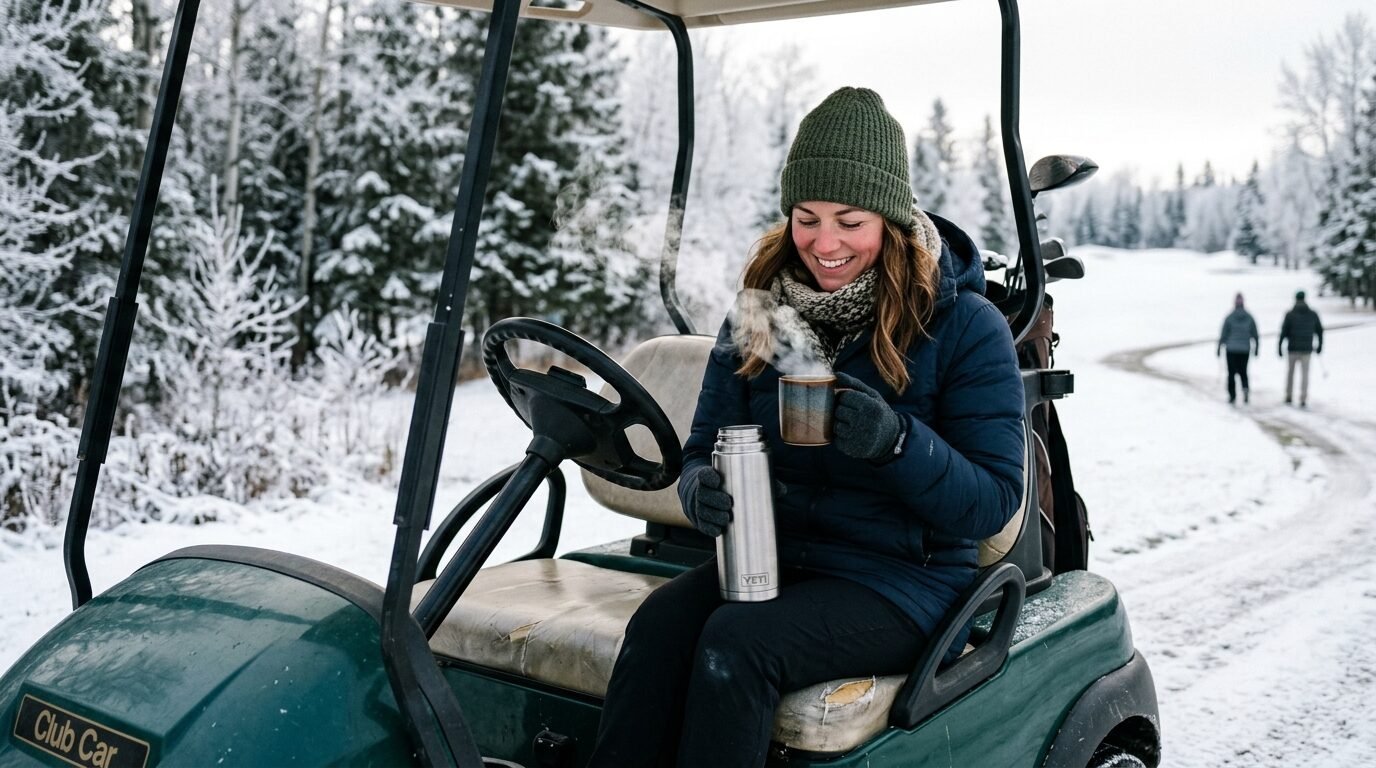
I love coffee, but it is bad for winter golf. Caffeine is a vasoconstrictor. It makes your blood vessels smaller. This reduces the amount of warm blood reaching your hands. I’ve noticed my hands stay much warmer when I drink herbal tea or warm lemon water instead.
Staying hydrated is also key. Dehydration leads to poor circulation. Even if you aren’t sweating, you lose moisture through your breath in the cold air. I try to drink 16 ounces of warm liquid during the front nine.
I also avoid ice-cold sports drinks. Why put internal “ice” into your body when it is 40 degrees outside? Stick to a thermos with soup or warm cider. It warms your core from the inside out.
10. The Three-Glove Rotation Strategy
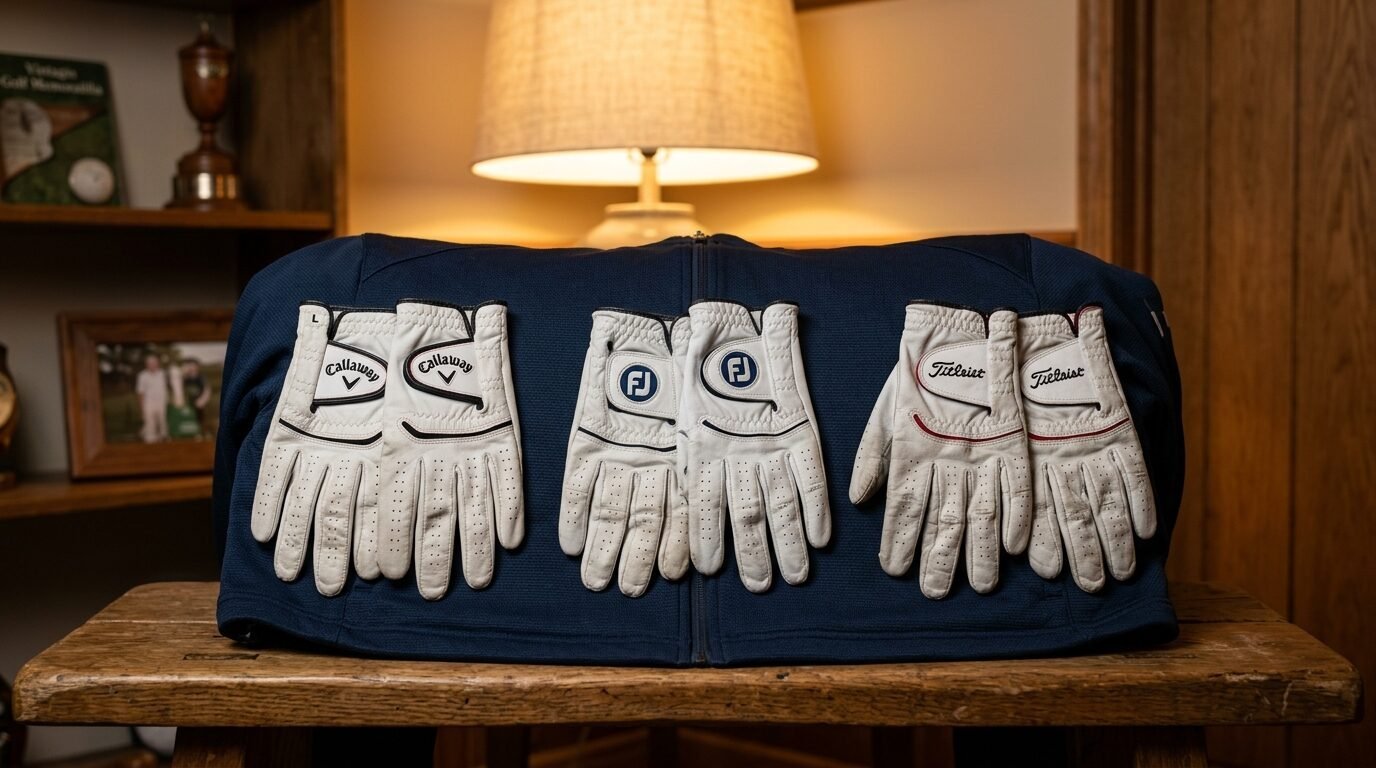
If it is drizzling or very damp, your gloves will eventually get cold. I carry three pairs of winter gloves. I rotate them every six holes. I keep the “waiting” pairs inside my jacket, pressed against my body.
This ensures that every few holes, I am putting on a warm, dry glove. The heat from my body pre-warms the gloves. I’ve tried this during tournament play and it keeps my confidence high. There is nothing worse than putting on a cold, damp glove on the 14th tee.
I store them in a Ziploc bag inside my inner pocket. This keeps them away from any moisture in the air. It’s a small detail that makes a massive difference by the end of the round.
11. Maintain Grip Pressure Awareness
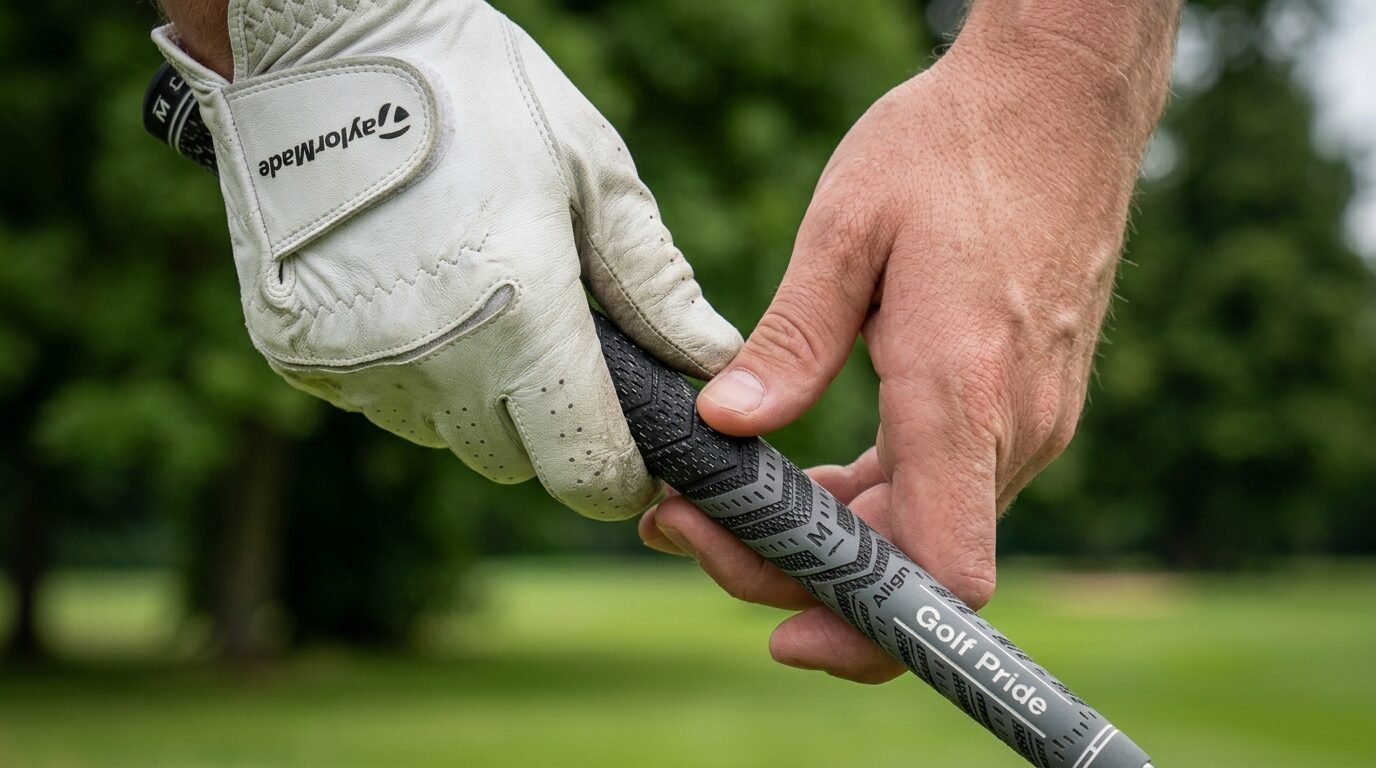
When hands get cold, they get stiff. You lose the ability to feel how hard you are squeezing the club. Most golfers start “death-gripping” the club in winter. This tension cuts off circulation.
I make a conscious effort to waggle the club more in the winter. I focus on a grip pressure of about 3 out of 10. This keeps the muscles in the hands and forearms relaxed. Relaxed muscles allow for better blood flow.
I’ve seen this help with shot consistency too. Cold weather makes the ball travel less distance. If you add a tense grip to that, you will lose even more power. Keep the hands soft and the blood moving.
12. Use Battery-Powered Heated Mittens
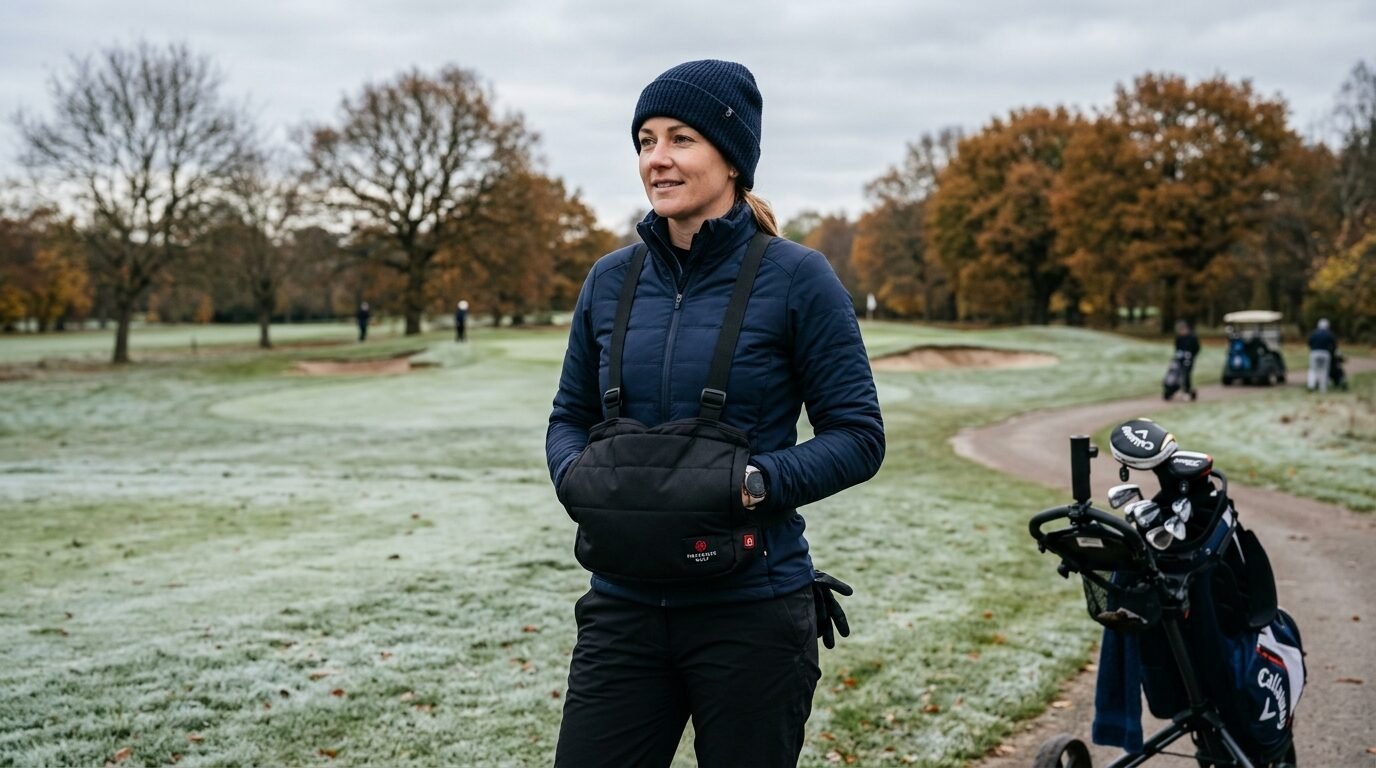
For extreme cold, I use the G-Tech Heated Pouch. It’s a tube you hang around your waist, like a quarterback uses in the NFL. You stick both hands inside. It has a high-output heating element.
This is the ultimate solution. You don’t even need to wear thick gloves while playing. You just keep your hands in the pouch until it is time to hit. Your hands stay incredibly warm and soft.
I’ve tried this in 30-degree weather with a wind chill. My hands felt like I was sitting in a warm living room. It is a bit of an investment, but for those who play all year, it is the best tool available.
13. Swing Speed and Warm-Up Drills

Don’t just walk to the tee and swing. You need to get the blood pumping to your extremities. I do “arm windmills” before I start. I swing my arms in large circles. The centrifugal force literally pushes blood into the fingertips.
I’ve noticed that if I do this for 30 seconds, my hands feel tingly and warm. It’s a simple physics trick. I also take 10-15 vigorous practice swings with two clubs. This heavy lifting gets the heart rate up quickly.
I’ve seen this work for older players who have slower circulation. You have to force the body to move the blood. Don’t let your hands stay static for too long.
14. Eat High-Energy Snacks
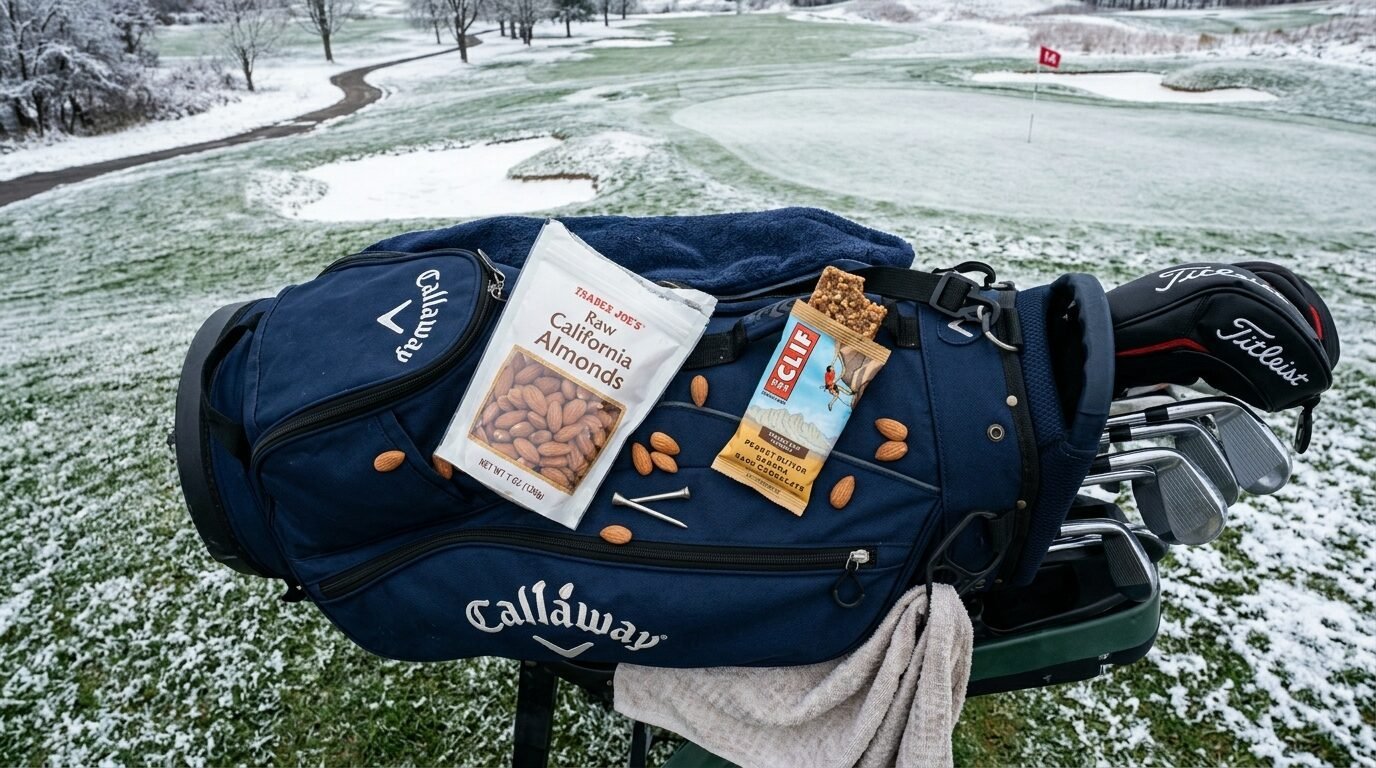
Your body needs fuel to create heat. I eat a high-protein, high-fat snack every 4 holes. I like almonds, jerky, or a peanut butter sandwich. These take longer to digest and provide a steady stream of metabolic heat.
If you are hungry, you will get cold. I’ve seen many golfers skip breakfast and then freeze by the turn. Your internal furnace needs wood to burn.
I avoid sugary snacks like candy bars. They give you a quick spike but then a “crash” that leaves you feeling colder. Stick to slow-burning fuels to keep your hand temperature stable.
15. Post-Shot Rituals and Movement
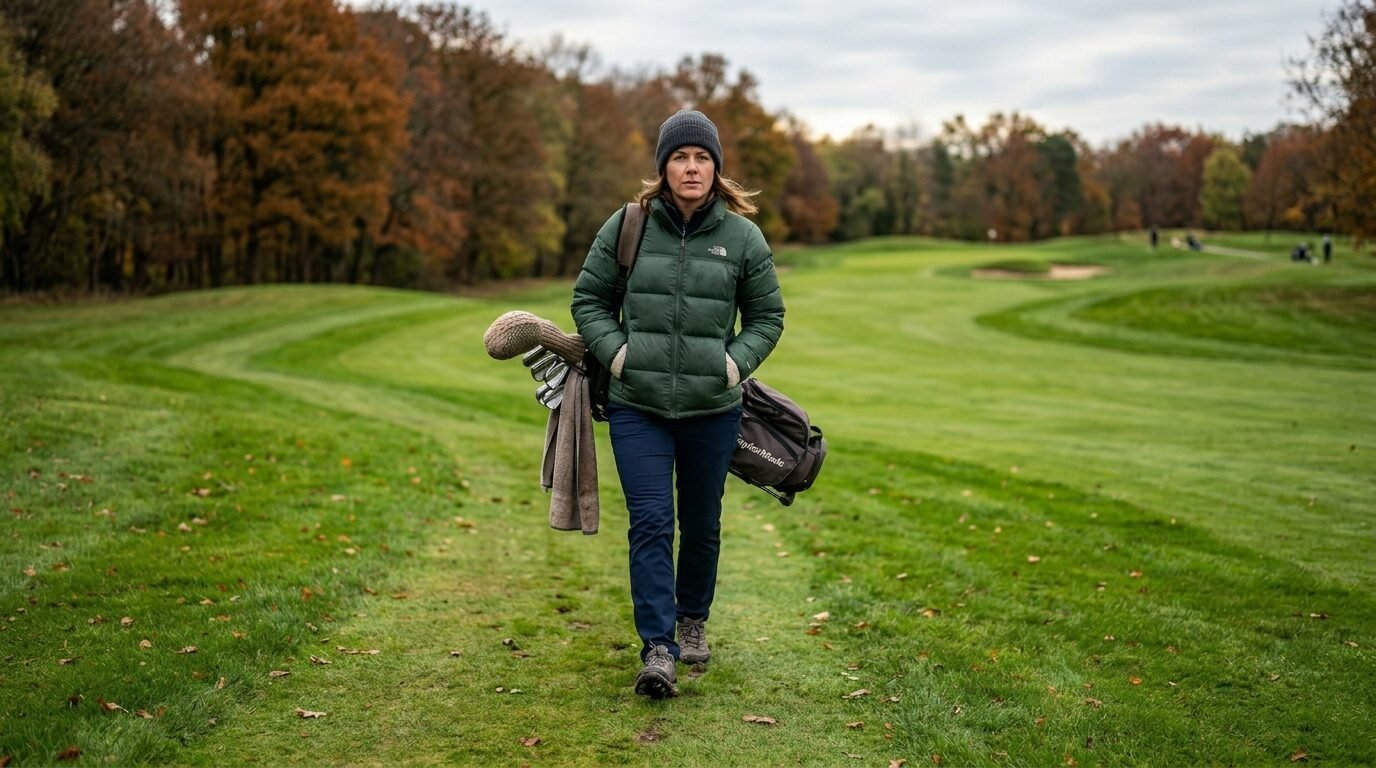
What you do after the shot matters just as much as the shot itself. As soon as my club goes back in the bag, my hands go into my pockets. I never walk down the fairway with my hands swinging by my sides.
I also do finger exercises while walking. I make a fist and then extend my fingers fully. I repeat this twenty times. This “pumping” action keeps the small muscles in the hand active.
I’ve noticed that if I keep my fingers moving, they never get that “stiff” feeling. It’s about being proactive. Don’t wait for the numbness to start. Keep the movement going from the first hole to the eighteenth.
Frequently Asked Questions
Can I wear two regular golf gloves to stay warm?
You can, but it won’t be very effective. Regular leather gloves don’t have insulation. They are also usually tight, which can limit blood flow. It is much better to buy a pair of dedicated winter golf gloves. These are designed with fleece or thermal linings that actually trap heat.
Do hand warmers ruin golf gloves?
Most chemical hand warmers are safe. However, I have seen some very hot electric warmers slightly singe synthetic glove materials if they are left in direct contact for too long. Always keep the warmer in a pocket or a cart mitt rather than directly against the glove for extended periods.
What is the best temperature for winter golf?
Most golfers find that 40°F (4°C) is the limit for enjoyable play. Once it drops below 35°F, the ground often freezes, and the ball feels like a rock. However, if you use the warming strategies mentioned above, you can comfortably play in temperatures as low as 30°F.
Why does the ball fly shorter in the cold?
Cold air is denser than warm air. This creates more drag on the ball. Additionally, the materials in the golf ball become less elastic in the cold, leading to lower ball speeds. Expect to lose about one club of distance for every 20-degree drop in temperature. Keeping your balls in your pocket to stay warm can help slightly.
Are iron covers really necessary?
They aren’t mandatory, but they help. Metal is an excellent conductor of cold. If your clubs are exposed to the air, the cold travels through the head and up the shaft. This makes the grip feel even colder. Covers provide a layer of insulation that keeps the metal at a more reasonable temperature.
Should I use rain gloves in the winter?
Rain gloves like the Srixon RainGrip are excellent if the conditions are wet. They actually gain more grip when they get damp. However, they don’t offer much insulation. If it is dry and cold, stick to thermal winter gloves. If it is wet and cold, wear rain gloves but use cart mitts between shots.
How do I prevent my skin from cracking?
Cold air and constant contact with golf grips can dry out your skin quickly. I apply a heavy-duty hand cream like O’Keeffe’s Working Hands before and after the round. This creates a protective barrier that prevents painful cracks in your fingertips.
Summary of Tools for Winter Golf
| Tool | Purpose | Recommendation |
| Winter Gloves | Primary warmth while swinging | FootJoy WinterSof |
| Cart Mitts | Maximum heat between shots | Titleist Cart Mitts |
| Electric Warmer | Immediate, adjustable heat | Ocoopa Rechargeable |
| Heat Packs | Long-lasting disposable heat | HotHands Super |
| Heated Pouch | Ultimate warmth for walking | G-Tech Heated Pouch |
| Wrist Gaiters | Seals the gap at the cuff | Smartwool Merino |
| Thermal Vest | Keeps core warm for circulation | Galvin Green Interface |
Conclusion

Winter golf is a test of preparation. I’ve found that the players who complain about the cold are usually the ones who didn’t plan. By combining specialized gloves, heat sources, and smart physiological habits, you can keep your hands perfectly warm.
I’ve played some of my best rounds in the winter. The courses are quiet, the rates are lower, and the air is crisp. Don’t let the fear of cold fingers keep you inside this season. Start with a pair of cart mitts and an electric warmer. You will be surprised at how much better you play when you aren’t fighting the shivers.
Now, grab your gear and get out there. The fairways are waiting.

Jenna Carter is the Senior Style Editor at Her Golf Outfit and a lifelong golfer turned certified personal stylist. With a background in retail buying for major athletic brands, she leads our brand reviews and lookbook curation, spotting the pieces worth your money and decoding country-club dress codes so you never second-guess what to wear to the clubhouse.