
Stepping onto the first tee in freezing temperatures feels entirely different than a warm summer morning. You feel the chill in your fingers before you even take a practice swing. Many players pack their clubs away when the leaves fall, but you do not have to stop playing. I remember my first December round. I wore a bulky puffer coat and thick cotton sweatpants. By the fourth hole, I felt frozen, sweaty, and completely unable to turn my shoulders. My swing disappeared. That miserable afternoon forced me to figure out exactly what works. You want to feel confident, look chic, and stay warm without restricting your swing. Getting your golf wear right completely changes how you play in the cold.
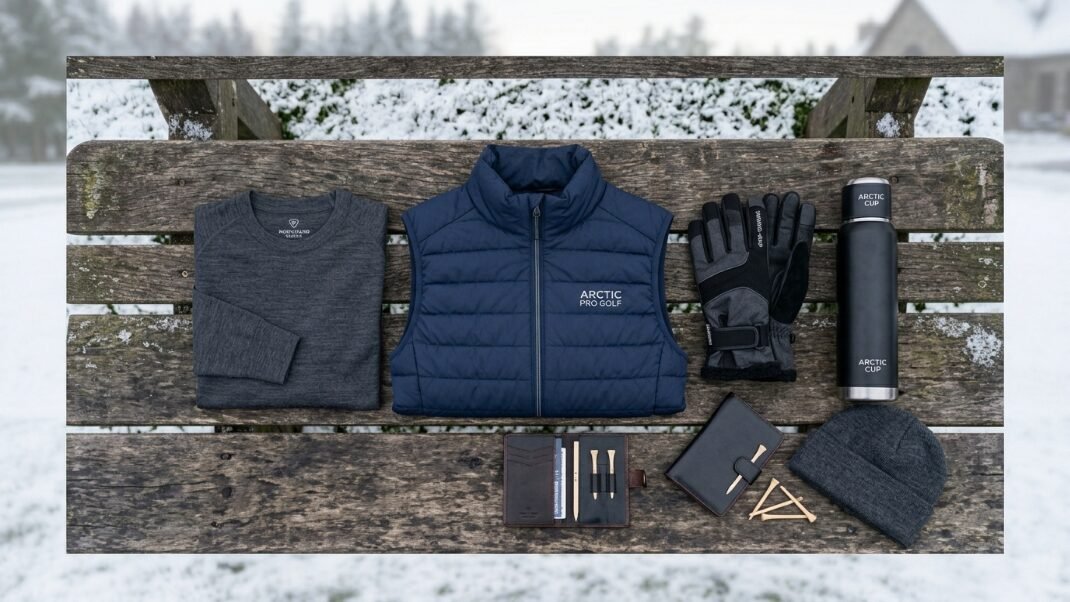
This guide gives you the exact blueprint for dressing for cold rounds. You will find exactly which fabrics keep you warm and which ones trap freezing sweat against your skin. I break down the exact three-layer method that touring professionals use to maintain a flawless performance outfit. You will see current pricing and honest reviews of gear from top brands like Adidas, Under Armour, and Galvin Green. I also share specific styling tips to help you build stunning winter looks that function perfectly on the course. By following this guide, you will know exactly what to buy, what to leave in your closet, and how to put together a golf outfit that helps you play your best games all winter long.
The Core Blueprint for Your Golf Outfit

The foundation of any successful winter round starts in your closet. You cannot just throw on your heaviest winter coat and expect to play well. Golf demands a full, unrestricted shoulder turn and precise weight shifts. Heavy coats block those movements completely.
In my experience, building a reliable wardrobe takes trial and error. I spent way too much money on the wrong items before figuring out what actually works. You need pieces that trap body heat, block the wind, and let your arms move freely.
We use a specific three-layer system. This method lets you adjust your body temperature as the weather shifts. Mornings start freezing, but walking the course generates serious body heat. By the back nine, you might want to shed a layer.
Let me break down exactly how this system works in real life. You start with something tight against the skin. Next, you add a warming piece. Finally, you put a shield over everything. This combination guarantees you stay warm without looking bulky. You get to maintain a tailored, athletic silhouette that looks chic on and off the course.
The Foundation of Your Winter Looks
Your base layer sits directly against your skin. This piece dictates your comfort for the entire round. If this layer fails, every other piece of clothing fails with it.
I have seen so many beginners show up in standard cotton long-sleeve shirts. Cotton acts like a sponge. It absorbs your sweat and holds it right against your skin. When the cold wind hits, that wet cotton turns into an ice box. You will shiver for hours.
You need a proper thermal base layer made from moisture-wicking materials. Merino wool and high-quality synthetics pull moisture away from your skin. They push that moisture outward so it can evaporate. Your skin stays dry, which means you stay warm.
I tested the Under Armour ColdGear fitted crew last winter. The four-way stretch material hugged my body perfectly. I felt zero restriction in my backswing. It kept me entirely dry through 18 holes in 42-degree weather. Expect to pay around $50 to $70 for a high-quality base layer, but this purchase directly dictates your comfort more than anything else.
Mid-Layers for a True Performance Outfit
Once you secure a good base, you need an insulator. The mid-layer traps the heat your body generates while walking the fairways.
You have several great choices here. Quarter-zip pullovers, cashmere sweaters, and fleece-lined tops all do a wonderful job. I prefer lightweight fleece because it gives maximum warmth with zero bulk.
Cashmere offers a luxurious feel and incredible warmth. If you want to look chic at the country club, a classic cashmere V-neck always works. Just remember that cashmere requires delicate washing.
Performance synthetics offer easier care. Adidas makes excellent fleece-lined mid-layers that wash beautifully and dry quickly. When selecting this piece, pay close attention to the shoulders and armholes. Take a practice swing in the fitting room. If the fabric pulls tight across your back, grab the next size up.
Outerwear That Defends Against the Elements
The final layer acts as your shield. Wind and rain ruin golf rounds faster than dropping temperatures. A strong outer shell blocks those elements completely.
A golf-specific windproof jacket makes a huge difference. Regular rain jackets crackle and pop when you move. They also fit poorly around the waist, bunching up right over your belt. Golf jackets feature stretchy panels in the back and shoulders.
I highly recommend a high-quality gilet or vest. Vests protect your core organs, keeping your blood warm as it pumps to your hands and feet. Because vests have no sleeves, your arms swing completely freely. I wear a Galvin Green windproof vest for almost every round under 50 degrees. It costs around $150, but it lasts for years and performs flawlessly.
Breaking Down the Best Materials for Golf Wear
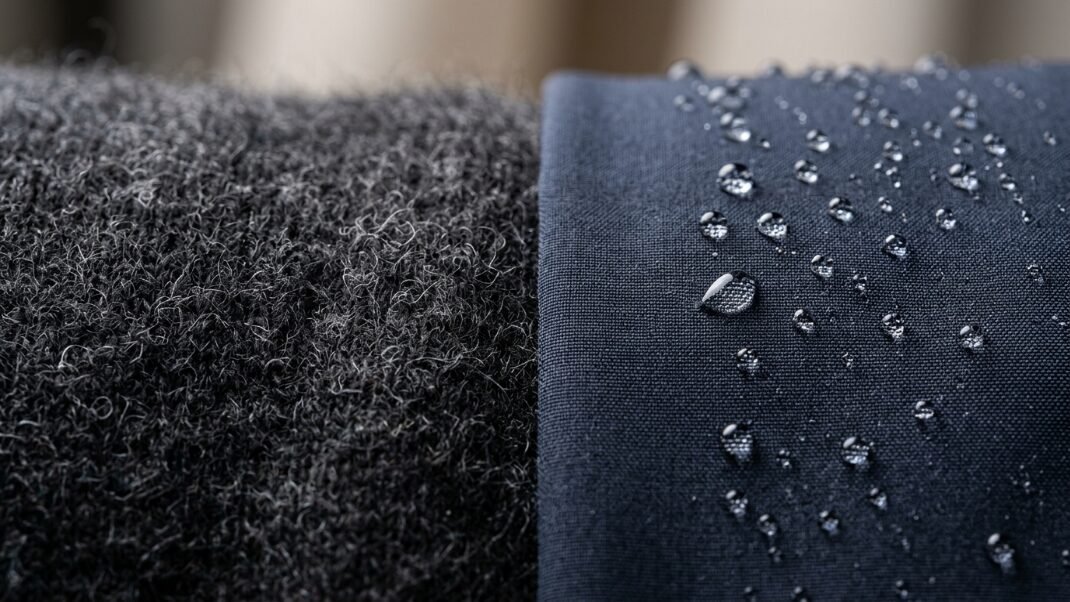
Not all fabrics behave the same way in the cold. Knowing what to check on the clothing tag saves you money and frustration. Let us look at exactly what goes into a high-quality winter golf outfit.
The Magic of Merino Wool
Merino wool comes from a specific breed of sheep. Unlike regular wool, merino fibers are incredibly fine and soft. They never feel itchy against your skin.
This natural material regulates temperature perfectly. It keeps you warm when the air is freezing, but it also prevents overheating if the sun comes out. Merino wool also fights odors naturally. You can wear a merino sweater several times between washes without any issues.
Brands like Peter Millar and Glenmuir use premium merino in their winter lines. These pieces cost more, often starting around $120. They drape beautifully and create stunning winter looks that transition easily to dinner after your round.
High-Tech Synthetics
Modern synthetic fabrics changed womens golf fashion completely. Brands mix polyester, elastane, and nylon to create magical materials.
These fabrics stretch in four directions. They bounce back to their original shape instantly. Companies treat these materials with water-repellent finishes. Water literally beads up and rolls off your sleeves.
Galvin Green uses Gore-Tex in their top-tier outerwear. Gore-Tex features microscopic pores. These pores are too small for water droplets to enter, but large enough for sweat vapor to escape. It provides absolute protection from the rain while remaining completely breathable.
Materials You Must Avoid
Leave all heavy cotton at home. Save your denim jeans for the weekend. Do not wear thick, chunky wool sweaters that belong on a ski slope.
Heavy materials restrict your turn. If you cannot turn your shoulders, you will swing entirely with your arms. This creates topped shots, slices, and immense frustration. Your performance outfit must prioritize movement above everything else.
Essential Cold Weather Accessories
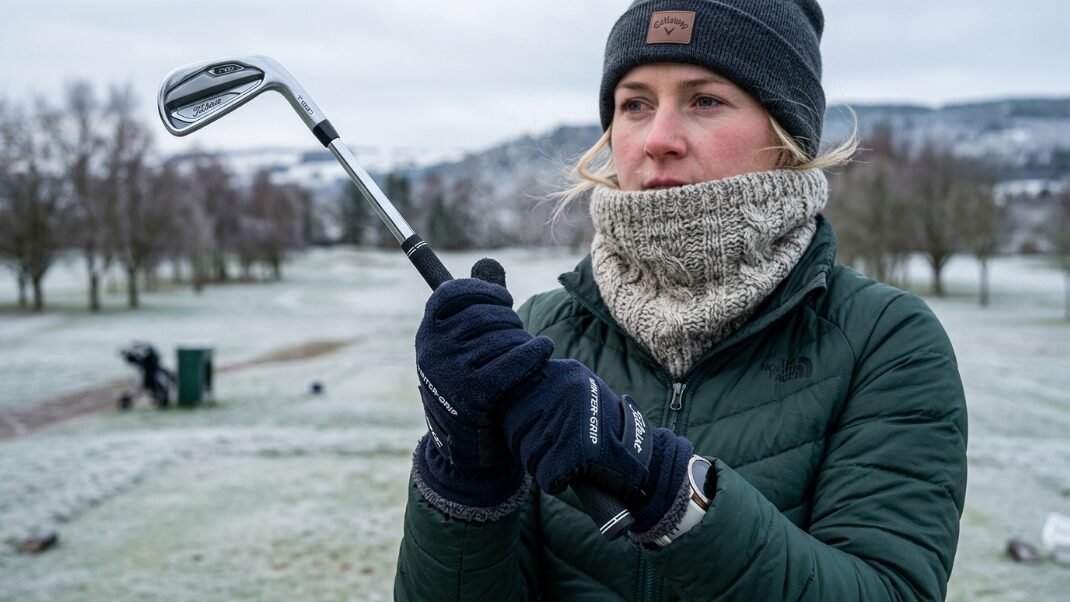
Your body prioritizes keeping your core warm. When temperatures drop, your body pulls blood away from your hands and feet. If you do not protect your extremities, you will lose all feeling in your fingers. You cannot grip a golf club with frozen hands.
Protecting Your Hands
Standard leather golf gloves become useless in the cold. You need gear designed specifically for winter weather.
Winter golf gloves come in pairs. You wear one on each hand. They feature fleece linings on the back and synthetic suede on the palms. The suede gets grippier when it gets slightly damp, giving you total control over the club. Callaway makes a brilliant pair of thermal grip gloves for around $25.
Cart mitts save lives on the course. These massive, oversized mittens fit loosely over your regular golf gloves. You wear them while walking between shots. When you reach your ball, you just shake them off. Your hands stay toasty the entire time.
I also buy a giant box of disposable hand warmers every November. I crack two open before my round and drop one in each pocket. Between shots, I bury my hands in my pockets. This simple trick makes a massive difference in how I feel confident over the ball.
Keeping Your Feet Warm and Dry
Golf courses hold water in the winter. Morning frost melts into puddles. If your feet get wet on the first hole, you will suffer for the next four hours.
Waterproof golf shoes are absolutely mandatory. Do not try to wear regular running shoes. Spikeless waterproof shoes from FootJoy or Adidas provide great traction on wet grass while keeping your socks completely dry. Expect to pay between $100 and $160 for a reliable pair.
Pair those shoes with merino wool socks. Thick thermal socks cushion your feet and trap body heat. Make sure your shoes have enough room to accommodate the thicker socks without pinching your toes. Pinched toes restrict blood flow, making your feet feel even colder.
Headwear and Neck Protection
You lose a massive amount of body heat through your head and neck. A simple baseball cap will not cut it in December.
You need a warm beanie. Pom beanies look incredibly cute and fit perfectly into modern womens golf fashion. Look for beanies with a fleece lining around the ears to block the wind.
A neck gaiter or snood provides incredible warmth without the bulk of a scarf. Scarves dangle in your way when you address the golf ball. A fleece snood sits snugly against your neck, blocking cold air from rushing down your spine.
Dressing for Specific Temperature Ranges
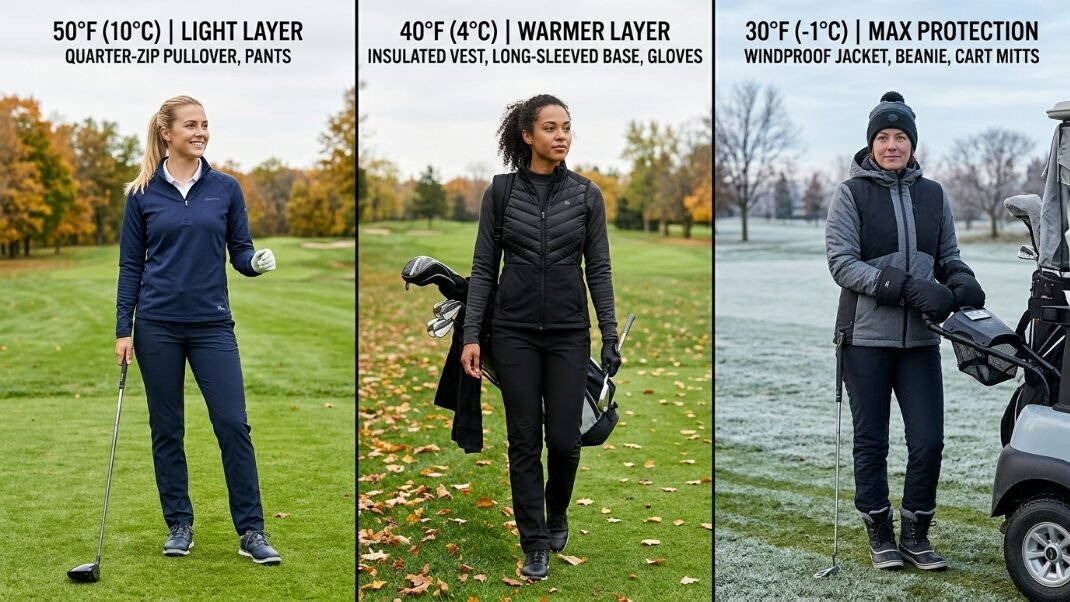
The thermometer dictates exactly what goes into your golf bag. You cannot wear the exact same outfit in 55 degrees that you wear in 35 degrees. I check the weather app right before leaving the house to finalize my layers.
Playing in the 50s
This temperature range feels wonderful if the sun shines. You want to avoid over-dressing here.
Start with a lightweight long-sleeve base layer. Add a standard polo shirt over the top. Finish with a lightweight vest or a thin quarter-zip pullover.
You will probably take the vest off by the third hole if you walk the course. Bring a thin pair of thermal gloves just in case the wind picks up, but your regular golf glove should work fine. Wear standard golf pants, leaving the thermal leggings at home.
Playing in the 40s
Now you need to take the cold seriously. The wind cuts right through thin fabrics at this temperature.
Wear a medium-weight thermal base layer. Put a fleece-lined mid-layer over that. Top it off with a windproof jacket or a heavily insulated vest.
You absolutely need a beanie and a neck snood. Switch to your winter golf gloves for the entire round. Throw hand warmers in your pockets. Wear thermal leggings underneath your golf pants, or opt for fleece-lined winter golf trousers.
Playing in the 30s
Only the most dedicated players brave the course when frost delays threaten the morning. You need maximum protection.
Start with a heavy-duty compression base layer. Add a thick cashmere or thermal fleece mid-layer. Your outer layer must be a fully windproof and waterproof jacket.
Wear cart mitts between every single shot. Put hand warmers in your pockets and in your shoes. Wear the thickest wool socks you own. You must wear fleece-lined winter golf pants. Keep a thermos of hot tea in your bag to warm your body from the inside out.
Comparing Top Winter Golf Brands

Navigating the endless options of golf wear gets overwhelming. I have tested pieces from almost every major brand over the past five years. Here is an honest look at who makes the best cold weather gear for women.
Lululemon
Lululemon completely disrupted womens golf fashion. While they started in yoga, their golf-specific clothing works incredibly well.
Their materials offer unmatched stretch and comfort. The silhouettes look modern, sleek, and chic. I constantly wear their Define Jacket as a mid-layer on the course. It hugs the body perfectly without restricting the swing.
Prices run high, with jackets often exceeding $118. The durability makes the price tag worth the purchase. Their pieces transition seamlessly from the 18th hole to running errands around town.
FootJoy
FootJoy reigns supreme in traditional golf wear. They understand exactly what players need in harsh weather conditions.
Their winter boots and waterproof shoes lead the market. Their StaSof winter gloves provide the absolute best grip I have ever experienced in freezing rain. FootJoy clothing leans more traditional in style. You will find classic cuts and solid colors.
Their outerwear features excellent waterproofing technology. A FootJoy rain jacket will cost around $200, but it will keep you bone dry in a downpour.
Adidas
Adidas blends athletic performance with trendy street style. Their COLD.RDY technology works brilliantly on the course.
The materials trap heat while letting sweat escape. They offer fantastic insulated joggers and quilted vests. Adidas pieces generally fit slightly looser than Lululemon, which gives you plenty of room for layers.
Pricing sits in the middle of the market. You can often find a great Adidas winter pullover for around $80. Their styling appeals heavily to younger players and beginners looking for a sporty vibe.
A Head-to-Head Comparison of Winter Outerwear
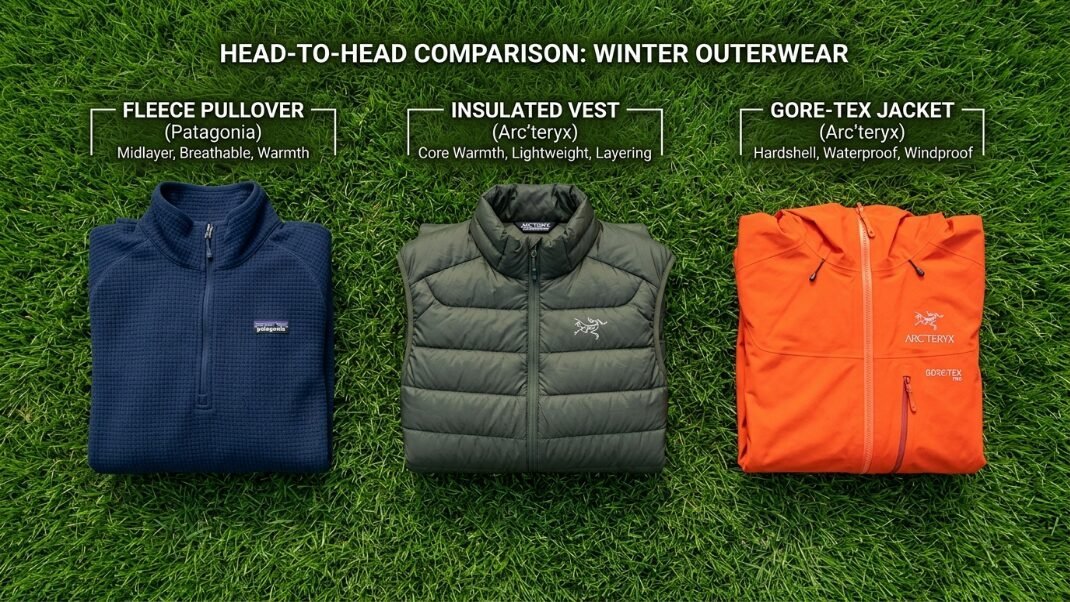
Choosing the right outer layer dictates your comfort. Let us break down the exact differences between the three main choices.
| Garment Type | Wind Resistance | Water Resistance | Swing Freedom | Average Cost | Best For |
| Fleece Pullover | Low | None | Excellent | $60 – $120 | Calm, dry days in the 50s |
| Insulated Vest | High | Moderate | Perfect | $80 – $150 | Breezy days in the 40s |
| Gore-Tex Jacket | Maximum | Maximum | Moderate | $200 – $350 | Freezing, wet, windy conditions |
This table shows why the vest wins for most winter rounds. Unless rain falls heavily, a vest gives you the perfect mix of core warmth and arm freedom.
Real-Life Case Studies from Winter Golfers
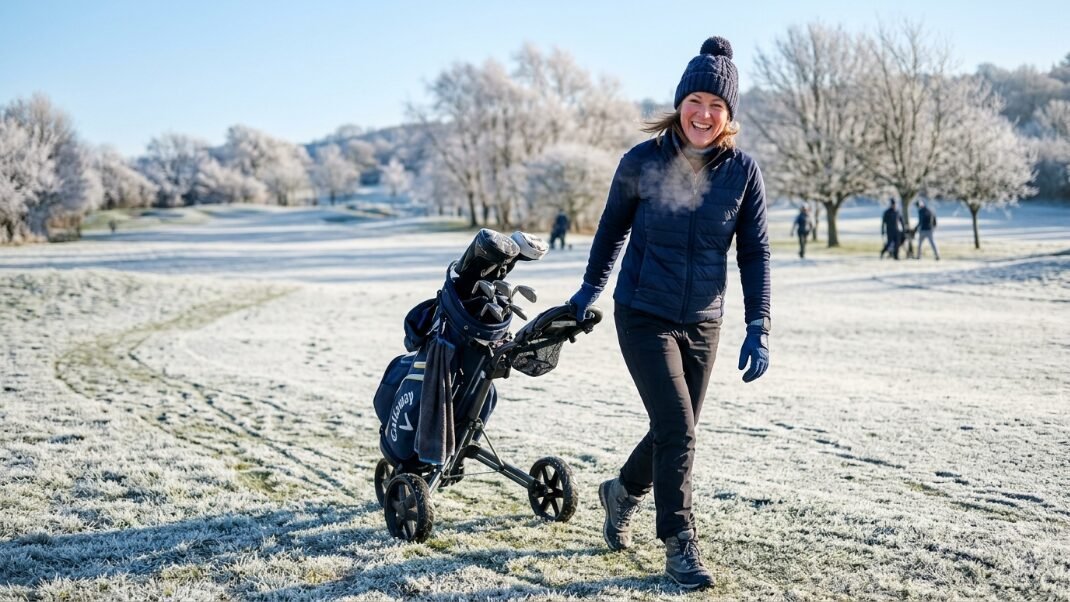
Hearing how other women handle the cold helps you build your own wardrobe. I spoke with three different players about their exact setups.
Sarah’s Country Club Setup
Sarah plays at a private club in Ohio. She walks the course carrying her own bag, which means she generates lots of heat.
“I used to freeze because I wore heavy cotton sweaters,” Sarah told me. “I would sweat while walking up a hill, and then freeze while waiting on the tee box.”
She switched to a merino wool base layer paired with an Adidas COLD.RDY vest. “The vest changed my life,” she said. “My arms feel completely free to swing. I look chic in the clubhouse, and I never overheat on the back nine.”
Emily’s Windy City Armor
Emily plays public courses around Chicago. The wind coming off the lake makes 45 degrees feel like 25 degrees.
“You cannot survive here without blocking the wind,” Emily explained. “I wear a Galvin Green windproof jacket over a thick thermal base layer. I never play without my cart mitts.”
Emily’s secret weapon involves her legs. “I bought fleece-lined golf pants from Puma last year. Before that, my legs would go completely numb by the 7th hole. Now, I stay out there for a full 18 holes and actually feel confident over my putts.”
Jessica’s Budget-Friendly Approach
Jessica just started playing golf last year in North Carolina. She did not want to spend a fortune on a winter wardrobe right away.
“I found incredible thermal leggings on Amazon for $25,” Jessica shared. “I wear them under my regular summer golf pants. I also use a basic Under Armour running top as my base layer.”
Jessica proves you do not need a massive budget to stay warm. “I splurged on good FootJoy winter gloves, but the rest of my outfit consists of running gear I already owned. It works perfectly for 50-degree mornings.”
Common Mistakes First-Timers Make
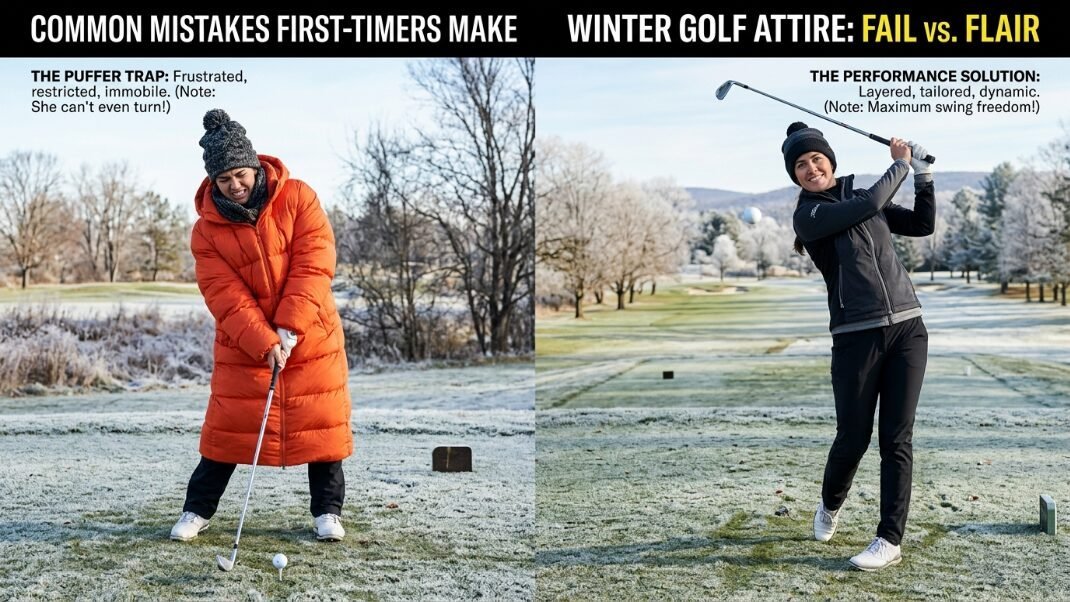
I watch beginners make the exact same errors every single November. Avoid these traps to keep your round enjoyable.
First, do not wear oversized coats. I see women wearing giant puffer jackets meant for a ski resort. They step up to the tee, try to swing, and the club gets caught on their own sleeves. The swing looks stiff and awkward. Buy fitted clothing that sits close to your body.
Second, do not ignore your neck and ears. A thick sweater does nothing if cold wind blasts down your collar. Always pack a neck snood in your bag. It takes up zero space but provides massive relief when the wind howls.
Third, do not forget your golf balls. Cold weather turns golf balls into rocks. A frozen golf ball will not compress when you hit it. It flies shorter and feels terrible off the clubface. Keep two golf balls in your pocket with a hand warmer. Swap them out on every hole. You will hit the warm ball noticeably further.
How Cold Weather Affects Your Golf Swing

Your body behaves differently in the cold. Your muscles feel tighter. Your joints feel stiffer. You simply cannot generate the same clubhead speed in December that you produce in July.
Accept this reality before you tee off. If you usually hit your 7-iron 130 yards, expect it to go 115 yards in the cold. Take one or two extra clubs on every approach shot. Swing smoothly rather than aggressively.
A smooth, balanced swing works far better in winter layers. Do not try to kill the ball. Let the extra club do the work. This mental shift helps you feel confident and relaxed, creating much better scores.
Walking the course becomes a massive advantage in the winter. Riding in a golf cart exposes you to a freezing breeze. Walking keeps your blood pumping and your muscles loose. Push carts make walking incredibly easy and save your shoulders from the strain of carrying a heavy bag.
Frequently Asked Questions About Cold Weather Golf
Beginners always have tons of questions about winter rules and gear. I compiled the most common questions I hear on the practice tee.
What is the absolute lowest temperature you should play golf in?
Most players draw the line at 40 degrees Fahrenheit. Below 40 degrees, the ground often freezes, making it impossible to take a divot. The golf ball also loses severe distance. If the sun shines brightly and the wind stays totally calm, a 35-degree day might feel acceptable with the right thermal base layer.
Do I really need to buy winter-specific golf pants?
You do not absolutely need them, but they make a massive difference. You can wear standard leggings under your regular golf pants as a cheaper fix. Fleece-lined winter golf pants simply look better and block the wind more heavily. They give you that perfect, tailored performance outfit look.
How do I keep my golf cart warm during a round?
If you must ride in a cart, buy a portable propane cart heater. These sit directly in the cup holder and blast hot air into the cabin. You can also buy a cart cover that acts like a tent, trapping the heat inside. Combine those two items, and you can play comfortably in almost any weather.
Why does my nose run constantly on the golf course in winter?
Cold, dry air triggers your nasal passages to produce excess moisture to protect your lungs. This happens to everyone. Pack a small travel pack of tissues in your golf bag. Wearing a neck snood pulled up over your nose also warms the air before you breathe it in, which helps significantly.
Are waterproof shoes really worth the high price tag?
Yes, without a doubt. Morning dew alone will soak regular mesh running shoes within three holes. Wet feet in cold weather ruin a round instantly. A good pair of spikeless waterproof shoes acts as the foundation of your entire golf wear setup. Treat them as a mandatory purchase.
Can I wear my heavy winter coat if I just take it off to hit my shot?
You can, but the constant on-and-off routine gets exhausting. It slows down the pace of play. Your body also experiences sudden temperature shocks every time you strip down to hit. A proper layering system lets you stay dressed the entire time while swinging freely.
Does cold weather damage my golf clubs?
No, modern golf clubs handle freezing temperatures perfectly fine. The shafts will not snap from the cold. The balls, however, perform poorly when frozen. Never leave your golf clubs in the trunk of your car overnight in the winter. Bring them inside your warm house to keep the grips soft and the shafts at room temperature.
Should I change my golf balls for winter play?
Many players switch to a softer golf ball in the winter. Harder, tour-level balls feel like literal stones when the temperature drops. A low-compression ball feels much softer off the clubface and often flies slightly further in freezing conditions. It helps you play your best games when conditions get tough.
Preparing Your Golf Bag for Winter
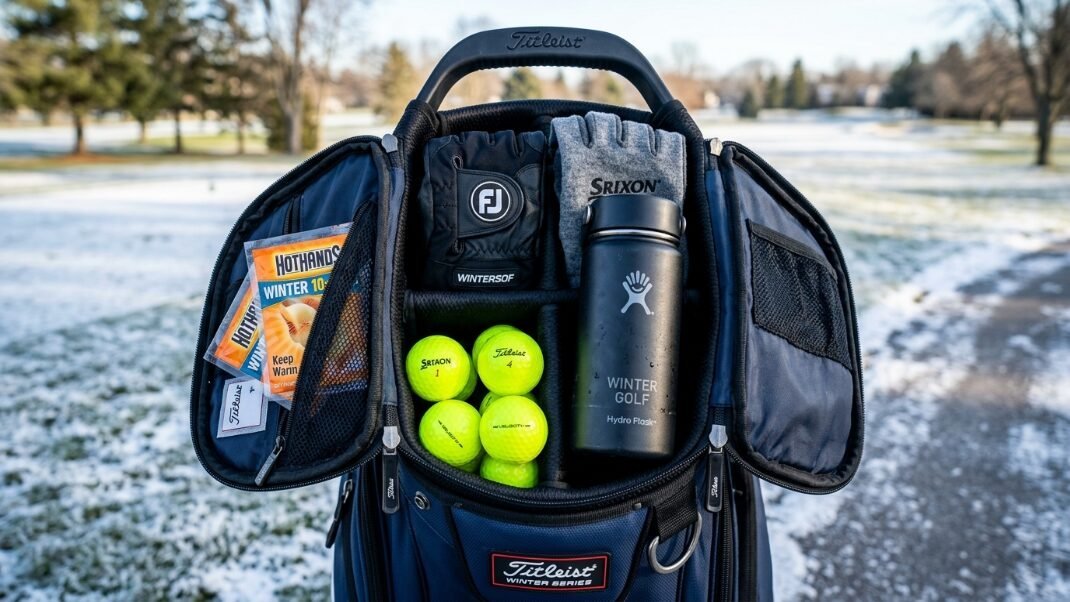
Your wardrobe handles your body, but your golf bag needs a winter makeover too. Take out the sunscreen and the cooling towels. Make room for winter survival gear.
- Always pack lip balm.
- Pack extra hand lotion.
- Carry a thermos filled with hot coffee, tea, or broth.
- Keep a dry towel hanging on your bag.
- Pack disposable hand warmers.
The cold wind severely dries out your lips and hands. Wash your hands in the clubhouse, apply lotion, and your skin will not crack in the wind. Taking a sip of hot liquid on the 14th hole acts like a shot of pure energy. It warms you from the inside out and boosts your mood instantly. Mud and wet sand cling to your clubfaces in the winter. You must wipe the clubface perfectly clean before every shot to maintain spin and control.
Maintaining Your Pace of Play
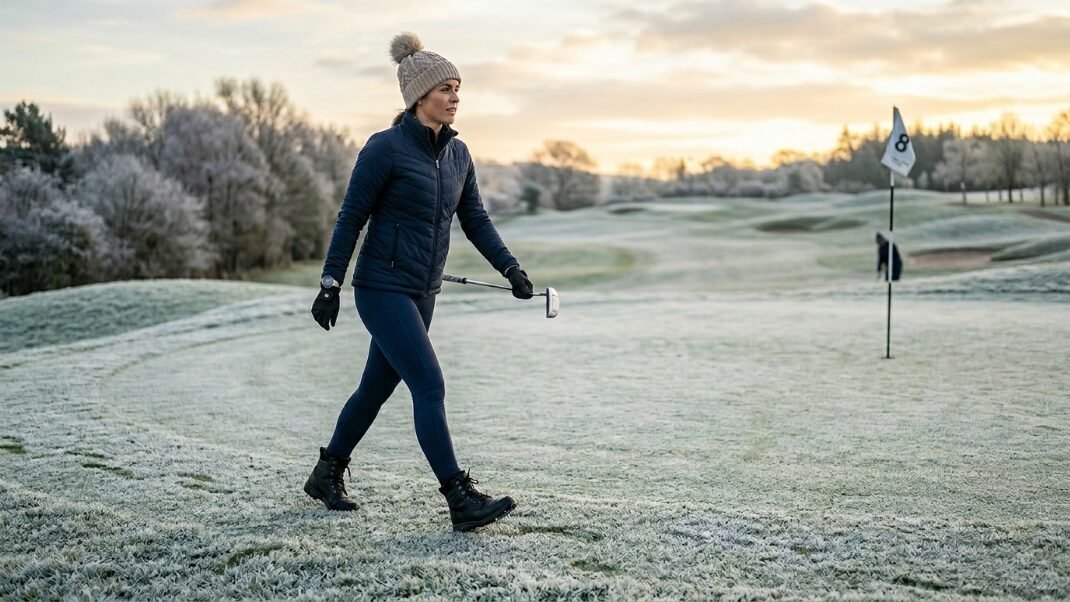
Winter golf requires extra preparation before every shot. You have to take off your cart mitts, put down your hand warmers, and wipe mud off your ball. All of this takes extra time.
You must walk purposefully between shots to keep up the pace. Prepare your yardage while walking up to the ball. Pull your club immediately. Do not stand over the ball shivering and overthinking. Step up, swing smoothly, and get your hands back into your warm pockets.
Playing efficiently keeps your body warm. Standing around waiting for your playing partners makes the cold feel ten times worse. Instruct your group to play ready golf. Whoever reaches their ball first should hit immediately.
Expanding Your Winter Wardrobe Slowly

You do not need to buy everything on this list tomorrow. Start with the absolute necessities. Buy a great thermal base layer first. Combine that with clothing you already own.
Next month, invest in a high-quality windproof vest. Ask for cart mitts and a beanie for holiday gifts. Over the course of two seasons, you will build a spectacular closet full of chic, functional womens golf fashion.
Shopping at the end of the winter season saves massive amounts of money. Golf brands deeply discount their cold weather gear in March and April. Stock up on those clearance items to prepare for the following November.
Setting Proper Expectations

Golf tests your patience on a perfect 75-degree day. In the winter, the course fights back even harder. The ground feels firm, the ball flies shorter, and the wind makes every putt trickier.
Do not obsess over your score. Use winter rounds to enjoy the outdoors, get some exercise, and spend time with friends. The courses look beautifully quiet and peaceful in December. Very few people brave the cold, meaning you often have the entire place to yourself.
Focus on making smooth, balanced swings. Enjoy the crisp air. Celebrate the good shots and laugh off the bad ones. If you dress properly, respect the weather conditions, and manage your expectations, winter golf becomes incredibly rewarding.
Final Thoughts on Your Winter Setup

Playing great golf in the cold comes down to preparation. The right clothing choices make the difference between a miserable afternoon and a beautiful day on the links.
Invest in fabrics that breathe, stretch, and block the wind. Master the three-layer method. Protect your hands, feet, and head with high-quality accessories. When you step onto the first tee feeling warm and unrestricted, your confidence skyrockets. You look chic, you feel comfortable, and you are completely ready to play some amazing golf.

Jenna Carter is the Senior Style Editor at Her Golf Outfit and a lifelong golfer turned certified personal stylist. With a background in retail buying for major athletic brands, she leads our brand reviews and lookbook curation, spotting the pieces worth your money and decoding country-club dress codes so you never second-guess what to wear to the clubhouse.